Staffordshire's highest rated dental practice - we guarantee high quality dental care at great prices! Full range of dental care available - we can do everything under one roof!



Mouth cancer, also known as oral cancer, is where a tumour develops on the surface of the tongue, mouth, lips or gums.
Tumours can also occur in the salivary glands, tonsils and the pharynx (the part of the throat from your mouth to your windpipe), but these are less common.
Symptoms of mouth cancer include:
Age and gender affect risk, but so too do factors you can control. The best advice is simply that living healthily greatly reduces your risk.
Smoking and drinking alcohol regularly have a huge impact. Someone who both smokes heavily and regularly consumes more than ten units of alcohol per week has 30 times the risk of developing mouth cancer than a non-smoker who drinks only in moderation.
The high impact of smoking and drinking alcohol might be why men have double the incidence rate of women.
Poor oral hygiene can increase the risk of cavities and also the associated risk of mouth cancer developing, which could be due to poor cleaning techniques or diets high in sugar.
Simply eating and drinking healthily and maintaining good oral hygiene (and quitting smoking) can greatly reduce anyone’s chances of being affected.
There are three main treatment options for mouth cancer. They are:
These treatments are often used in combination. For example, a course of radiotherapy and chemotherapy may be given after surgery to help prevent cancer from returning.
Mouth cancer can appear in different forms and can affect all parts of the mouth, tongue and lips. Mouth cancer can appear as a painless mouth ulcer that does not heal normally. A white or red patch in the mouth can also develop into cancer. Be aware of any unusual lumps in your mouth or jaw area and any persistent hoarseness. It is important to visit your dental team or doctor if these areas do not heal within three weeks. If you aren’t sure, go for a check-up anyway. The easy-to-read guide below can help you identify signs of mouth cancer, supplied by the Oral Health Foundation.
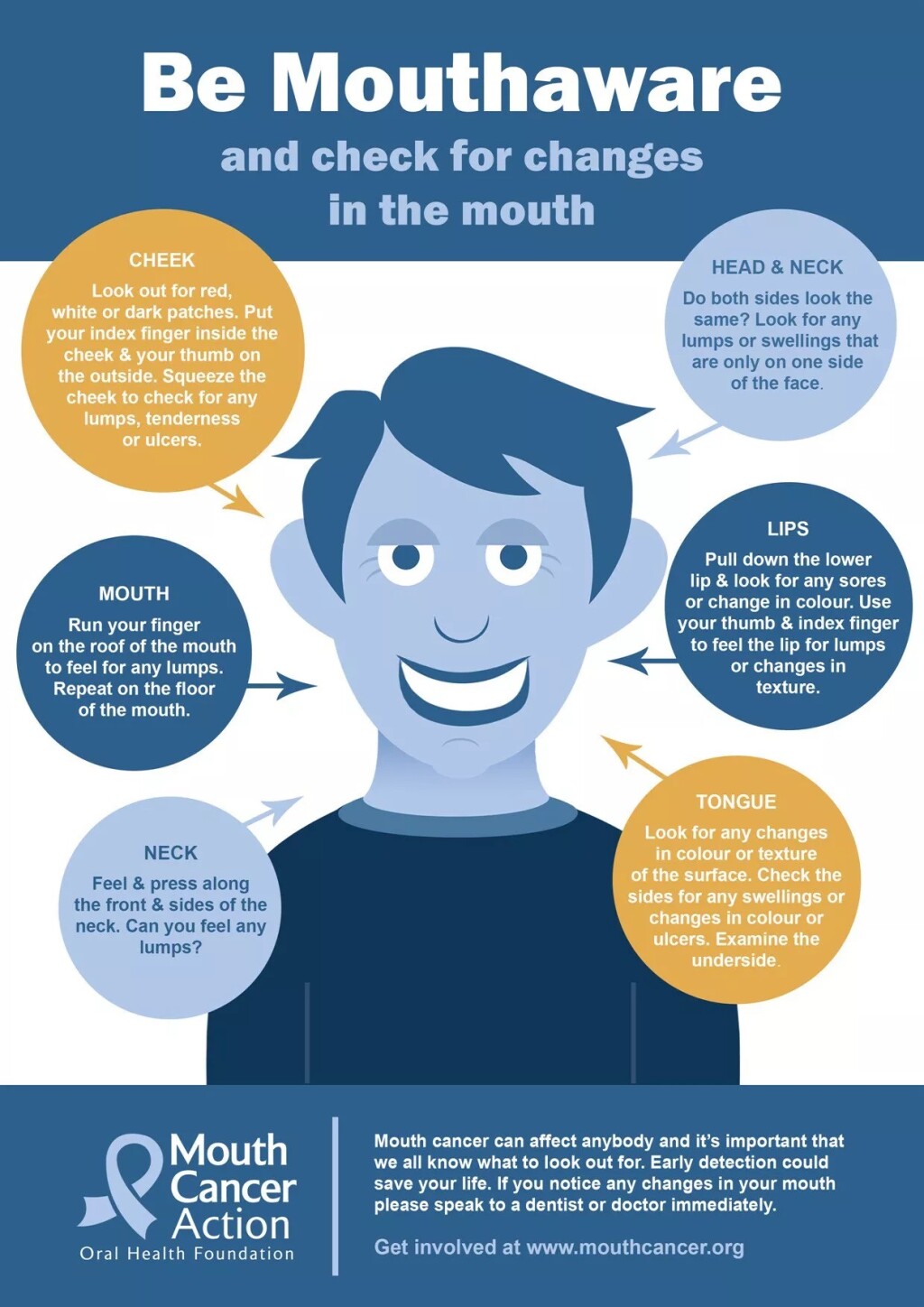
A dentist will be checking for signs of mouth cancer during any thorough examination, and so your routine check-up is much more than just a chance to get your teeth checked and polished; it also provides the first line of defence against mouth cancer.
Regular dental check-ups may ensure mouth cancer is caught at an early stage, and so survival chances could be 90% and not potentially in the 50/50 category of late diagnosis.
A two-step strategy would be to carry out regular checks at home and to then seek professional advice for any concerns. On top of this, having regular check-ups is a must.
At Church Lane, Stafford, we can do these checks for you when you are a patient at our practice.
Back to blog
Quickly match your needs with the right dental treatment using our simple treatment finder.
Have questions or ready to book? Reach out, and our team will guide you every step of the way.


Follow us on Instagram for real patient transformations, behind the scenes updates and the latest offers. It’s the easiest way to stay connected and inspired on your smile journey.
EXPLORE